
For students: you're the operator
What students do behind the counter, in HomeRoom, and during the weekly review of a school store.
 The RallyOrder Team · Jul 23, 2026 · 4 min read
 Running a school store means taking responsibility for a real customer, real money, and a line that has to move before the bell.
You’ll prepare the store, serve customers, work through problems, and explain what happened after your shift. Your advisor helps you learn the job and decide when to ask for help.
At the counter
RallyOrder shows the store’s products on the register. You add items to the cart and accept cash, card, or a split payment (part cash and part card).
For cash, the register calculates the change. For card, the reader handles the payment through Stripe.
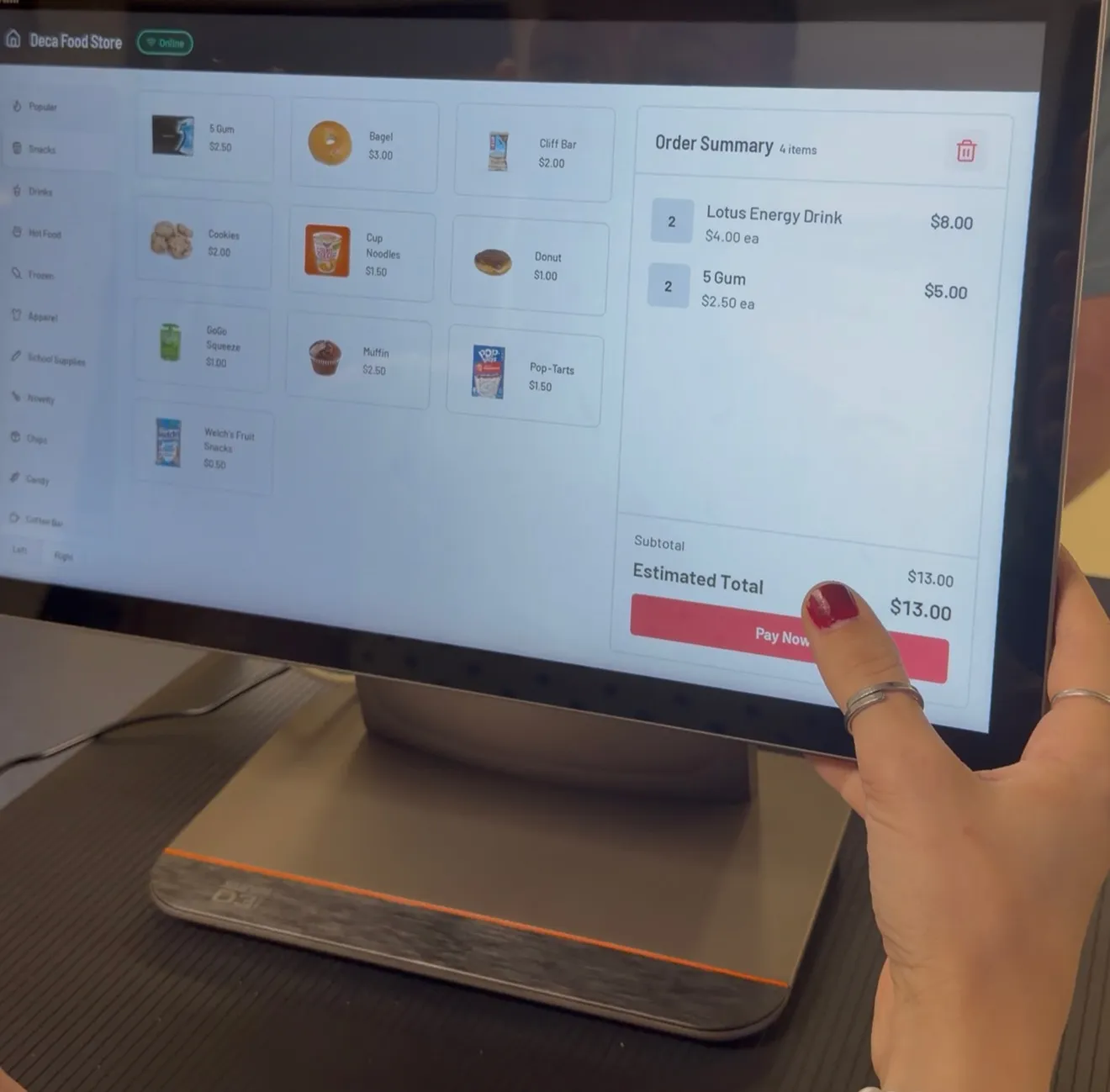
The customer-facing display shows the items, total, and payment status. It gives the customer a chance to confirm the order before the sale is complete.
Refunds need approval from someone with refund permission. That person uses their authorized PIN, and your school decides who receives that permission.
Beyond the register
The crew also counts stock, arranges displays, checks records, and plans announcements. Your role might be cashier, inventory lead, merchandising lead, finance lead, marketing lead, or store manager.
HomeRoom is RallyOrder’s store-management website. With the right permissions, students can help update products, set prices, manage inventory, and read store analytics. Finance Reports require advisor access; your advisor can share those records for class. Your advisor decides what you can access and change.
The work creates evidence you can use. A count shows what’s on the shelf. A sales report shows what sold. A drawer variance is a difference between the cash counted and the amount expected.
If a count doesn’t match the record, work with your advisor to check what happened.
Read the week
The store dashboard gives the crew numbers to review, including sales, top sellers, and trends. Two terms you’ll use are:
- Net sales: sales after discounts and refunds.
- Gross profit: net sales minus the cost of the products sold, before other store expenses. Product costs need to be recorded for this number to be useful.
At the Friday Huddle, the crew’s weekly review, bring 1 number, explain what you know, and say what still needs checking. Then recommend an action for next week.
A sales increase could come from more customers, larger purchases, a new product, or a schedule change. Check the evidence before deciding what to do.
Describe the work accurately
School-store experience belongs on an application or resume when you can explain the responsibility you held.
Useful evidence includes:
- the shifts or process you were responsible for;
- the cash, inventory, product, or reporting work you completed;
- a decision you recommended and the information behind it;
- the result you observed;
- the advisor approval involved.
Use your real responsibilities and real numbers. Store records can help you prepare, but your description should match the work you personally did.
Join the crew
If your school has a store, ask the advisor which roles are open and what training each one requires.
If your school is considering a store, share the school-store launch playbook with a business, career and technical education (CTE), or DECA advisor. School approval comes first.